
Last updated November 20, 2026
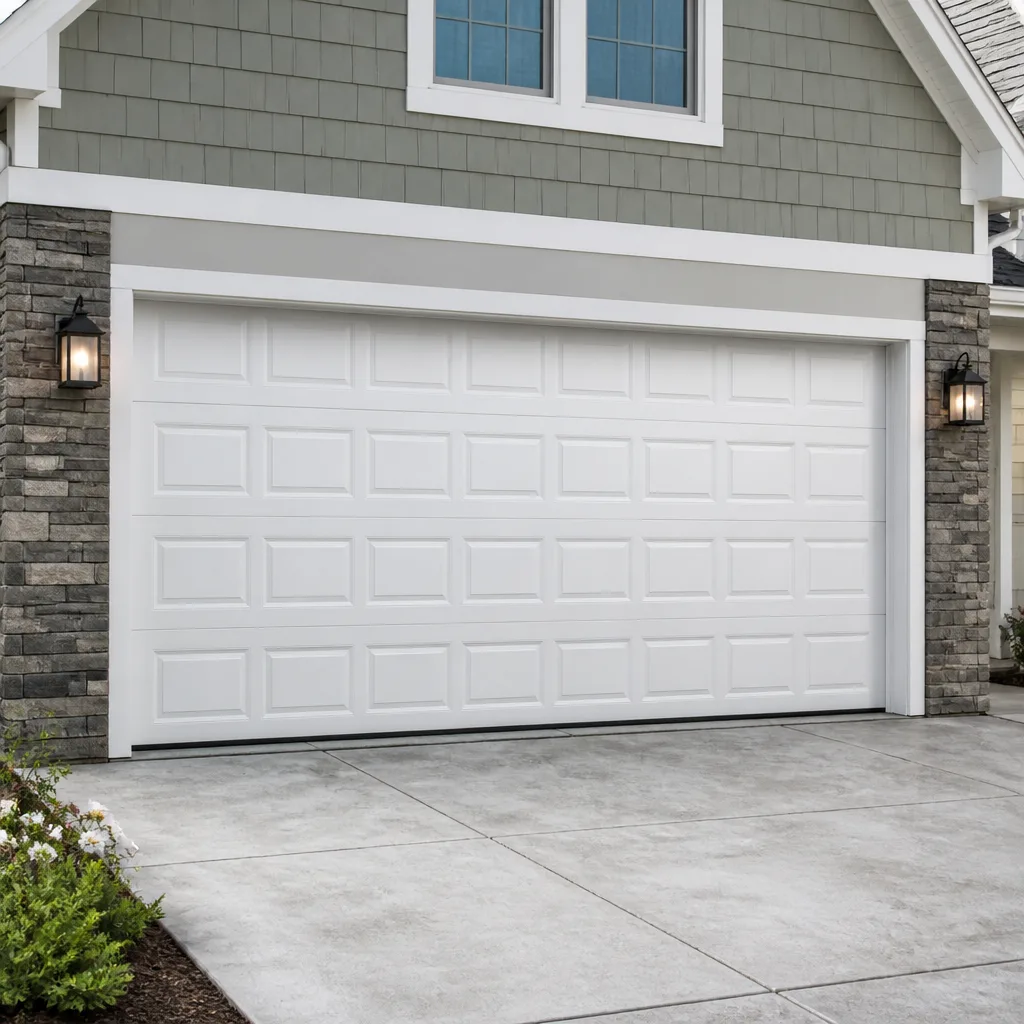 Raised-panel steel
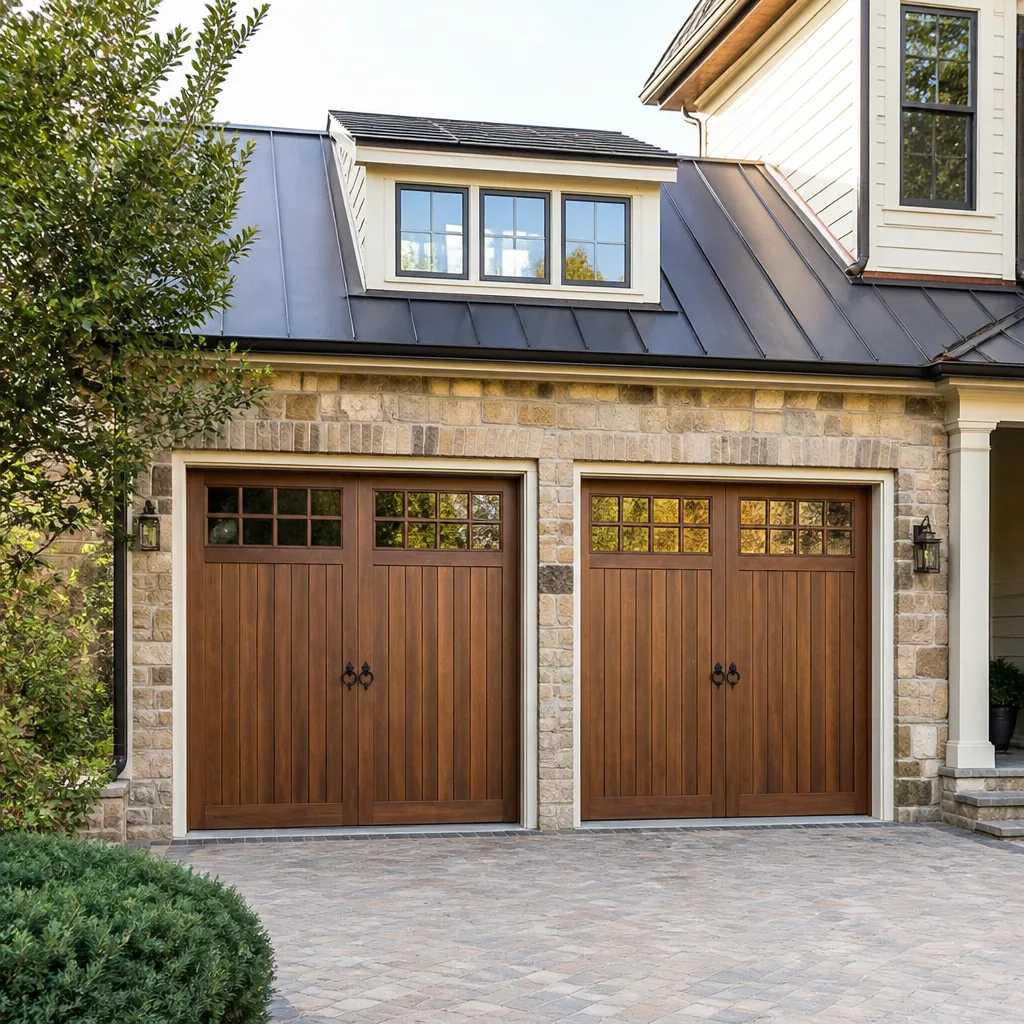 Carriage house
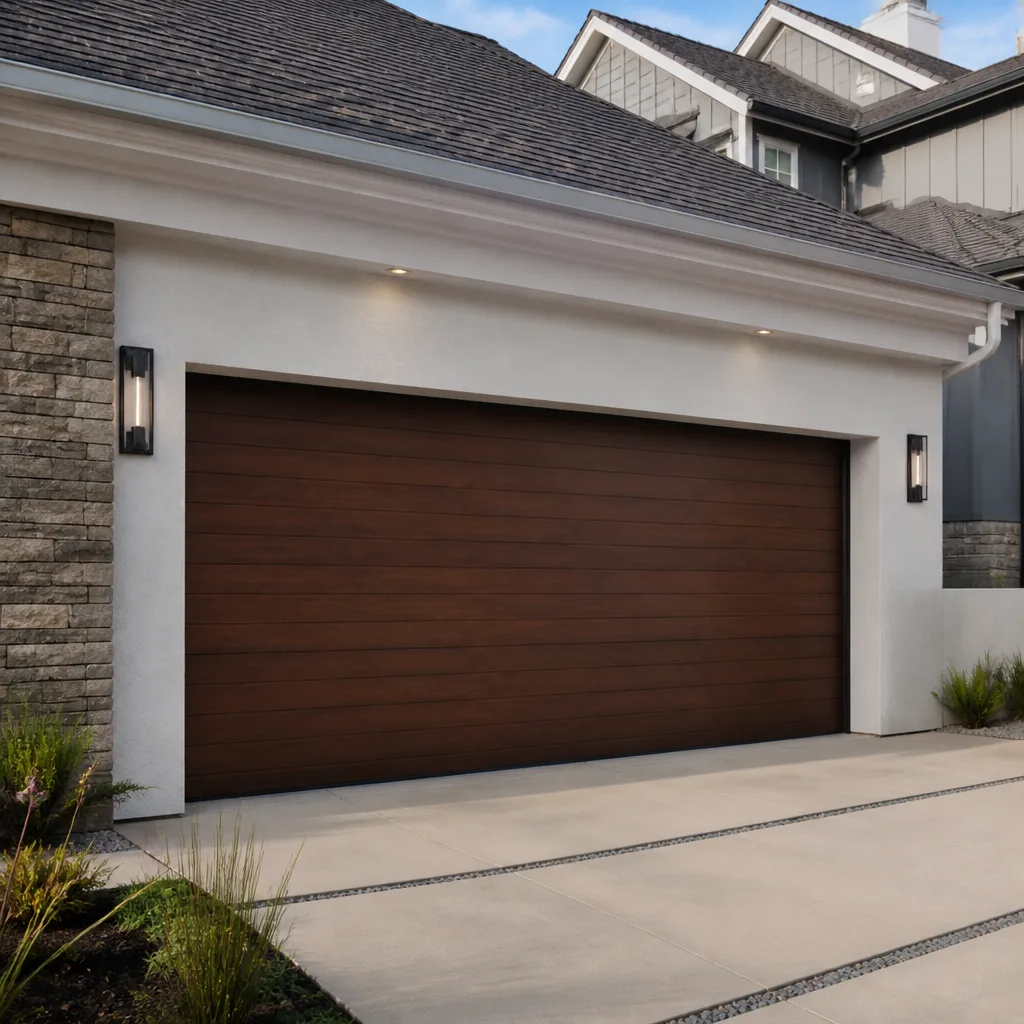 Modern flush
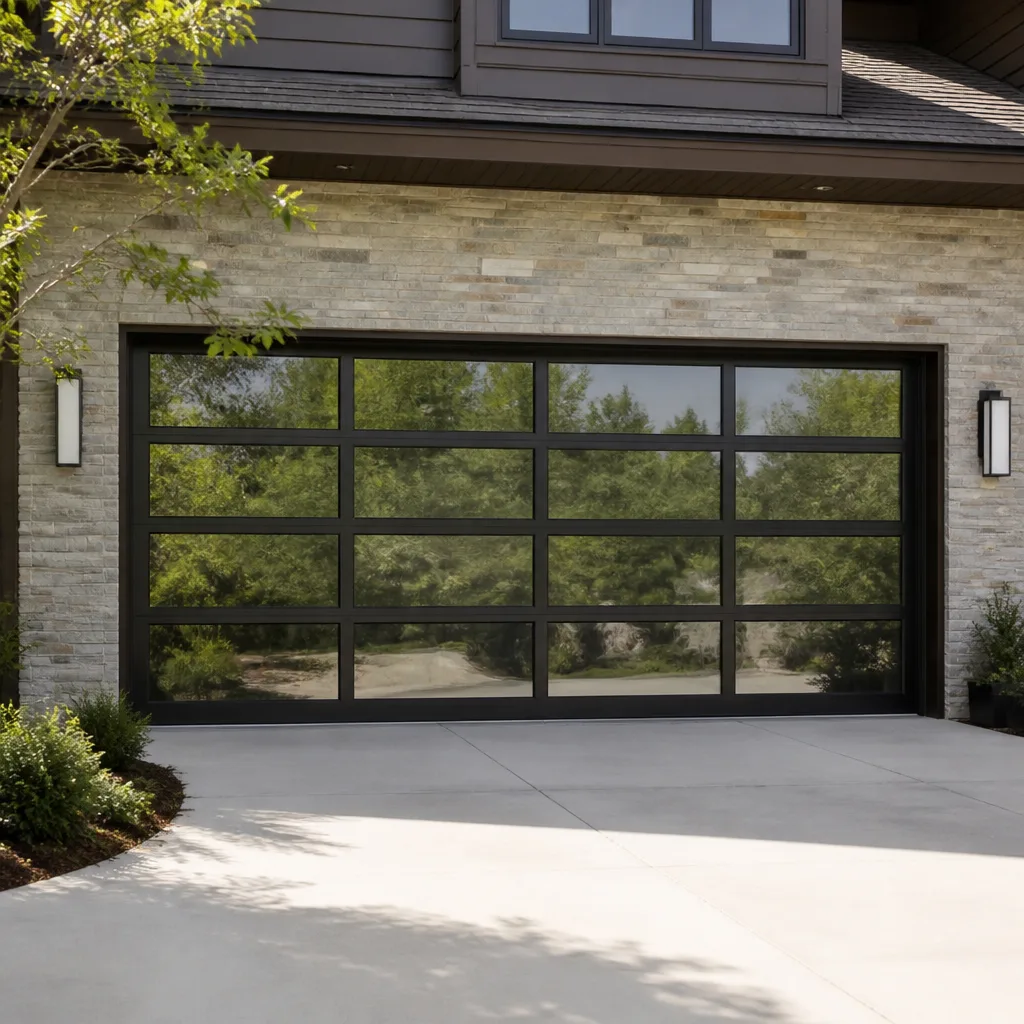 Full-view glass
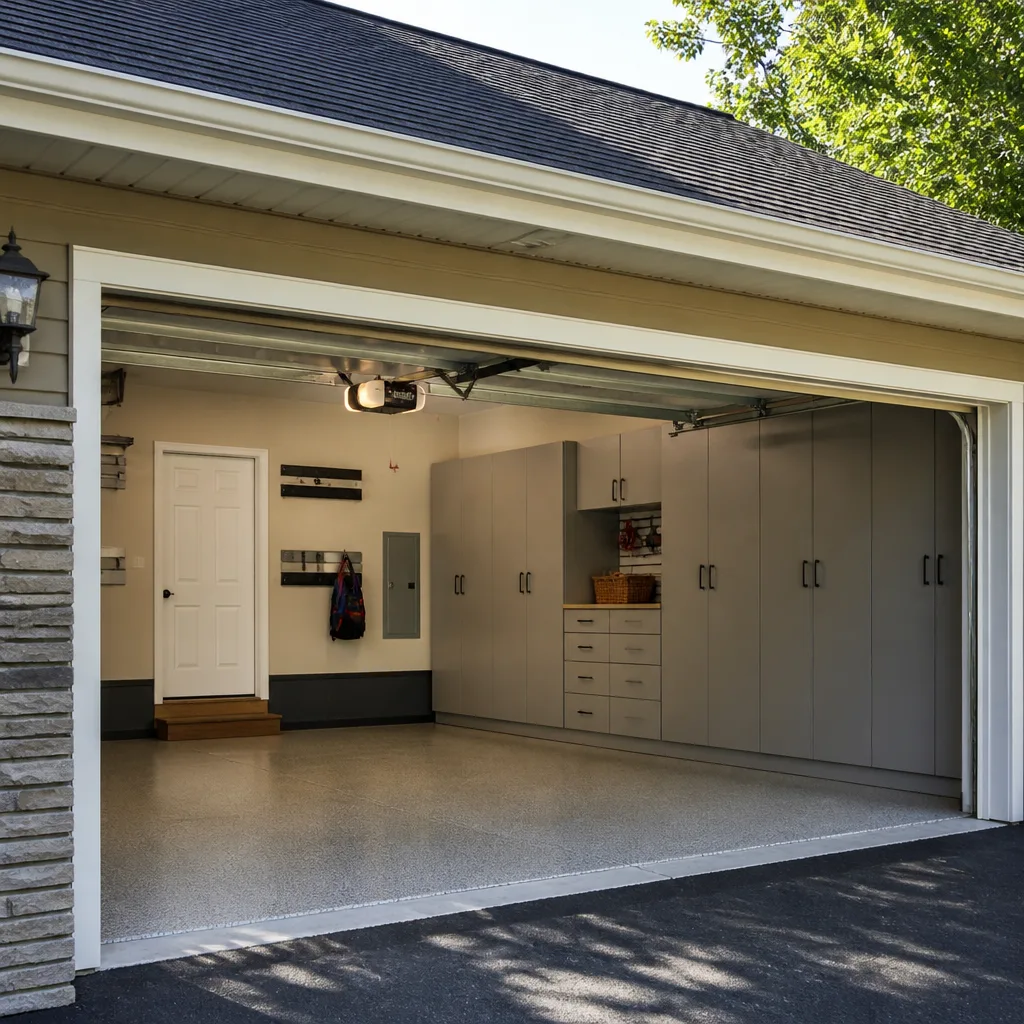 LiftMaster openers
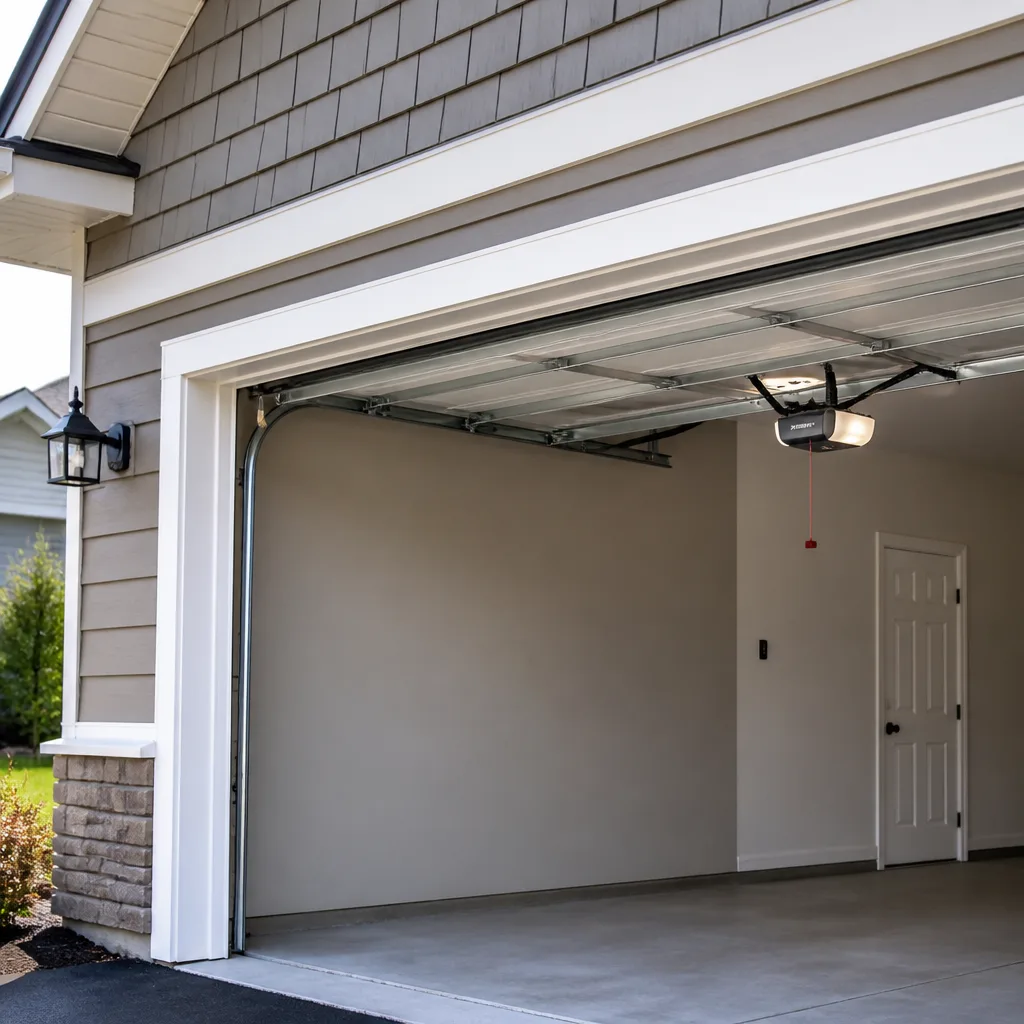 Chamberlain openers
Full 25-point door and opener safety check with every visit - springs, cables, rollers, tracks, and your LiftMaster or Chamberlain opener included
You get a price before we start. It does not change when the pro arrives.
Get your free estimateGarage Door Warning Signs: A Price Hill Homeowner’s Reference Guide
A garage door that takes two seconds longer to open than it did last month is not “getting old.” It’s a measurable symptom of spring fatigue, and it’s telling you something specific. Most garage doors in Price Hill that fail do not fail out of nowhere. They give months of notice through sound, movement, and the look of the hardware, and homeowners write that notice off as normal until the door drops. This guide teaches you to read your door’s behavior as diagnostic data instead of background noise. You’ll learn what each sound points to, what wear patterns mean, which signs mean “monitor it,” and which mean “stop using the door and call today.”
Quick Answer
The warning signs that matter most are a door that moves slower or unevenly than it used to, grinding or popping sounds during travel, a visible gap in the torsion spring above the door, frayed or kinked cables, and an opener that strains, blinks error codes, or loses remote range. Any change in how a door sounds, moves, or looks is worth a look. Signs involving springs, cables, and off-track doors mean stop using the door and call a professional in Price Hill for a same-day visit. We answer 24/7 at (855) 773-8249, with fast dispatch from 7am to 7pm, Sunday through Friday.
Styles & brands we work with
- Raised-panel steel
- Carriage house
- Modern flush
- Full-view glass
- LiftMaster openers
- Chamberlain openers
Table of Contents
- What Do the Sounds Tell You About a Failing Garage Door?
- Visual Warning Signs in the Springs, Cables, and Rollers
- Movement Warning Signs: Slow Travel, Uneven Lift, and Drift
- How Opener Behavior Works as a Diagnostic Tool
- “Monitor It” Signs vs. “Stop Using the Door” Signs
- Why Price Hill Seasons Expose Different Weak Points
- Brand-Specific Behavior: LiftMaster, Chamberlain, Genie, and Clopay
- What Garage Door Repairs Typically Cost in Price Hill
What Do the Sounds Tell You About a Failing Garage Door?
Sound is the earliest diagnostic signal a garage door gives you, and it’s the one homeowners dismiss fastest. Every garage door makes noise, but the type of noise tells you which component is failing. A door that has developed a new sound in the last few months is telling you where to look.
- Grinding almost always points to the rollers, the hinges, or the track itself. A roller with a seized bearing grinds against the track as it travels. If the grinding starts fine and gets louder partway up the door, listen for which side of the door it’s coming from. That narrows it to one side’s track and hardware.
- Popping or snapping during travel points to the torsion spring. A torsion spring under load is one solid piece of steel, and when a section has begun to fail internally, it pops as it takes up tension. A pop shouldn’t be treated as a minor annoyance: on a torsion spring it means the spring is close to shearing.
- Squealing is typically a dry roller, a dry hinge, or a torsion bar with worn bearings. Squealing is the least urgent sound on this list, but it’s the easiest to correct early, before the dry friction starts wearing metal.
- Banging, or a hard “boom” at the top or bottom of travel points to a few things at once: a spring that has lost its lifting force and is letting gravity do the work, a worn opener gear, or a door out of balance. Banging is a “stop and look” sound, not a “check it next weekend” sound.
One useful habit: stand in the garage and listen with the door closed and the opener off, then with the door in motion. A door in good condition sounds like one continuous, low mechanical hum. A door with a problem has a rhythm to it – a sound that repeats at the same place on the track, or one that changes as the door travels.
Visual Warning Signs in the Springs, Cables, and Rollers
Some failures announce themselves through sound. Others you can see with a flashlight and two minutes, and it’s worth a look once a season. Here’s how to identify each one without touching anything.
Torsion spring gaps
A healthy torsion spring is a continuous coil above the door. When a spring is fatiguing, a gap can open between coils where the wire has started to crack. A gap is visible from the floor with a flashlight. If you see one, do not operate the door. A torsion spring stores enough energy to cause serious injury when it fails, and it can fail without warning once a gap has formed. This is the single most important visual check on the whole door, and the one we tell every Price Hill homeowner to do first.
Cable fraying patterns
Look at the cables on both sides of the door, top to bottom, for wires sticking out of the coil, a kink, or a rust-colored area where a strand has broken. A cable usually frays first where it winds on the drum above the door or where it meets the bottom bracket. Fraying on one side means the door is being pulled unevenly, and the cable can snap without warning. Stop using the door and call for service.
Roller and hinge wear
Rollers should be round and quiet in their hinges. A roller that has worn flat on one side, or a hinge that has wallowed out its screw hole, shows as a wobble or a visible gap at the hinge plate. Rollers and hinges wear as parts, and a door with several worn rollers in a row is likely to start jumping the track. Visual inspection is where most garage door repairs start, and it’s the cheapest place to catch them.
If you’re not comfortable even looking closely at springs and cables, that’s the correct instinct. Call us and we’ll take a look. Our technicians have up to 15 years of experience reading exactly these failure patterns on doors across Price Hill.
Movement Warning Signs: Slow Travel, Uneven Lift, and Drift
A garage door’s movement is the clearest record of its condition, and it records continuously. You can track it with a stopwatch, and you don’t need any tools. Here’s the process:
- Time the door on a clean run. Open the door fully from closed and note the time. Then time it on the way down. Write both times down. You’re establishing a baseline for your own door, not comparing it to the neighbors’.
- Recheck the same measurement in a few months. If the door takes noticeably longer to open or close, the opener is working against more resistance than it used to. The most common cause is a spring that has lost tension.
- Watch the bottom edge as the door rises. An even lift means the bottom edge stays level with the floor line. If one side rises before the other, a spring on one side has weakened, a cable is stretched or kinked, or the door has started to go out of balance.
- Look at the door in the fully open position. It should sit square and level against the ceiling or the header. A door that hangs off level when open is off-track or out of balance.
- Listen for a change in the last few feet of travel. A door that speeds up or gets noisy as it approaches full open or full close is telling you the spring is no longer counterbalancing the door evenly.
Uneven lift and slow travel are both symptoms of a door that’s no longer balanced. They’re also the warning signs most Price Hill homeowners explain away as “how it’s always been.” A door that opened in 12 seconds in January and takes 16 seconds in July hasn’t been like that always. Something changed, and the fix is usually simpler and cheaper now than after the door comes off the track. If you notice any of these, it’s worth a call for garage door repair before the problem grows.
How Opener Behavior Works as a Diagnostic Tool
Your opener is the part of the system that talks to you, and most modern openers leave a record of their own struggles. If the door itself is in decent shape, the opener’s behavior tells you where the fault actually sits. Both of the big ecosystem families in Price Hill homes – LiftMaster and Chamberlain on one side, Genie and Craftsman on the other – give you diagnostic signals worth knowing.
- A straining motor on the way up sounds like a lift that’s laboring, sometimes with a rattle or a hum that changes pitch. On a door with a failing spring, the opener is trying to lift the whole weight of the door, and that’s the sound. The opener isn’t the problem, the spring is, but the opener is the messenger.
- Blinking error codes on the opener’s control board are its self-diagnostics. LiftMaster and Chamberlain units typically blink a set number of times in a repeating pattern to flag a specific fault, and Genie and Craftsman units do the same. Look up the pattern in the manual for your model. It’s often pointing at the door’s balance or the safety sensors rather than the opener itself.
- A door that reverses before it touches the floor is usually a safety sensor or a travel-adjustment problem. On a LiftMaster or Chamberlain, the safety-reversing sensors at the bottom of the tracks are a common culprit. A door that reverses on contact with the floor is also a sign that the opener’s travel limits need resetting.
- Remote range degradation – remotes that used to work from the end of the driveway now needing to be right under the opener – points to a failing logic board, an aging antenna, or interference from a new device in the garage. It’s a cheap thing to diagnose and a nuisance to live with.
If you’re seeing any of these, the right answer is to have the openers checked before they quit entirely. That work sits squarely with garage door opener repair, and it’s often quicker than homeowners expect.
“Monitor It” Signs vs. “Stop Using the Door” Signs
Not every sign means the same thing. The most useful skill you can build as a homeowner is sorting the door’s signals into two piles, because that’s the difference between a small repair and a real safety incident. Here’s the split we use when we look at a door.
Monitor it (and schedule service)
- Squealing on the way up or down – usually dry hardware
- A single noisy roller or hinge, with the rest of the door quiet
- Remote range that has gotten shorter but still works near the door
- A door that looks slightly crooked in the open position but doesn’t touch anything
- Occasional clicking from the opener that resolves on the next cycle
Stop using the door and call today
- A visible gap or break in the torsion spring, or a popped spring
- Any visible cable fraying, kink, or a cable hanging slack
- A door that has come off the track or is hanging at an angle
- Popping or snapping during travel
- The opener strains to lift the door, or the door is too heavy to lift by hand
- Any change in the sound of the springs while the door is in motion
Springs and cables belong on the “stop” list for one reason. They store force. A torsion spring under tension, or a cable holding a door’s weight, can release without warning, and a trained technician handles both with the door restrained and the right tools. If you’re not sure which list a sign belongs on, err on the side of the “stop” list and call for a same-day visit. We’d rather look at a door that’s fine than look at one after it’s dropped. That’s the same instinct that makes our Garage Door Repair Price Hill service a same-day operation for the urgent cases.
Why Price Hill Seasons Expose Different Weak Points
In Price Hill, our seasons do a lot of the early diagnostic work for you. The temperature swings we get through the year stress garage doors in a predictable order, and knowing the seasonal pattern helps you catch a failing part before it fails entirely.
Winter
Cold contracts the metal in the track and the springs, and it stiffens the grease in the hinges and rollers. Doors that were quiet all summer often start grinding in the first cold snap. The fix is usually lubricating the hardware, but the diagnostic value is real: a door that gets noisy specifically when it’s cold is telling you its hardware is dry. Winter also brings the wind-driven cold and the snow and ice that can freeze the bottom seal to the slab, which puts extra strain on the opener.
Summer
Heat expands the metal and softens the door’s seals, and it’s also when the springs get the most use because the door gets opened most. A torsion spring that’s been fatiguing for a couple of seasons often breaks in a stretch of hot weather. If your door starts to feel heavy or slow in July, listen to it. That’s the season the springs are under the most cumulative work.
The spring and fall swings
Our temperature swings bring the most rapid expansion and contraction, and that’s the cycle that works the screws in the hinges and the bolts in the brackets loose over time. It’s also when doors go out of adjustment. A door that starts to bind in a swing season is giving you a warning that it’s working against new resistance, and it’s a good time to have it looked at. The same goes for any door with a failing panel after a storm. If a section has taken impact damage, our garage door installation team can tell you whether a panel can be replaced or the whole door needs to come out.
Brand-Specific Behavior: LiftMaster, Chamberlain, Genie, and Clopay
Different brands fail in slightly different ways, and knowing your brand helps you read its signals. We work on the eight brands that cover the vast majority of homes in Price Hill – LiftMaster, Chamberlain, Genie, Clopay, Amarr, Wayne Dalton, Craftsman, and Raynor – and we diagnose by brand logic rather than trial and error. Two of the patterns homeowners ask about most:
- LiftMaster and Chamberlain openers share a lot of parts and control logic. Their self-diagnostic blink patterns are usually specific, and when a Chamberlain opener is blinking a code, it’s telling you whether the fault is in the safety sensors, the travel limits, or the door itself. That’s a fast diagnostic, and it’s where we start.
- Genie and Craftsman cover a slightly different ecosystem, and their error codes and remote systems behave differently. A Craftsman opener that’s lost its remotes or is reversing on its own is usually flagging a logic board or sensor issue, and it’s worth looking at those before you replace the opener.
- Clopay doors are among the most common on Price Hill homes, and the door’s panels and hinges are the first place to look when you notice a section that’s bowed, a hinge that’s loosened, or a panel that’s taken an impact. A Clopay door that’s out of balance usually has a spring problem, not a panel problem.
If your opener or your door’s electronics are giving you warning signs, have the brand checked by someone who works on it regularly. The pattern matters.
What Garage Door Repairs Typically Cost in Price Hill
Here are typical price ranges for common garage door repairs in the Price Hill market. These are estimates, and the written estimate you receive after we’ve looked at your door is what sets the final price. Every price is quoted and agreed before any work starts. The list below is for a single job, and a matched pair of springs is usually replaced together, so a pair costs about twice a single spring.
- Single torsion spring replacement: typical range $180 to $340
- Matched pair of torsion springs: about twice the single-spring range
- Extension spring replacement (per spring): typical range $140 to $260
- Cable replacement (per cable): typical range $120 to $220
- Roller and hinge replacement: typical range $100 to $200
- Opener repair: typical range $120 to $260
- Off-track door repair: typical range $150 to $400, depending on damage to the track and panels
- Opener replacement (unit and install): typical range $350 to $750, depending on the unit
These are estimates, not quotes. A door that looks like a spring problem but turns out to have a bent track and a damaged panel will price differently once we’ve seen it. The one thing that doesn’t change is this: we quote and agree the price before any work starts. You won’t get an invoice that’s bigger than the estimate you approved. If the job turns out to be more involved than we thought, you’ll know before we start, not after. Call (855) 773-8249 for a free estimate on your door. Estimates are free, and we can usually give you a clear range on the first call.
Common Mistakes to Avoid
- Blaming the opener for a spring problem. A grinding, straining opener is often just the messenger for a tired spring. Replacing a healthy opener when the door is out of balance wastes money and leaves the real problem in place.
- Assuming a slow door is getting old. It’s a measurable symptom, not a personality trait. Time the door, write down the time, and recheck it later. A door takes a fixed number of seconds, and a change in that number is a signal.
- Using the door after you see a spring gap or a frayed cable. Springs and cables store force, and both can fail without warning once they’ve started to give. Stop using the door and call a professional for the same-day visit. It’s the safest thing you can do in a Price Hill garage.
- Ignoring one noisy roller until the whole track is rattling. A single bad roller is a cheap fix. A door that jumps the track because a roller seized and took the track with it is a much bigger repair, and it’s usually avoidable.
- Spraying lubricant on a spring to stop a squeak. It doesn’t fix a fatigued spring, and it makes it harder for a technician to inspect the spring’s surface for cracks. If you hear a squeal, lubricate the hinges and rollers, not the spring.
- Skipping the fall check. In Price Hill, fall is when the swing seasons work the hinges and brackets loose. A quick seasonal look at the hardware – no tools, just a flashlight – catches most problems early.
- Calling a generalist for a spring or a door off the track. A door off the track or a spring under load needs someone who handles it every day, with the door restrained and the right tools. It’s not a handyman job, and it isn’t a DIY project.
See the difference
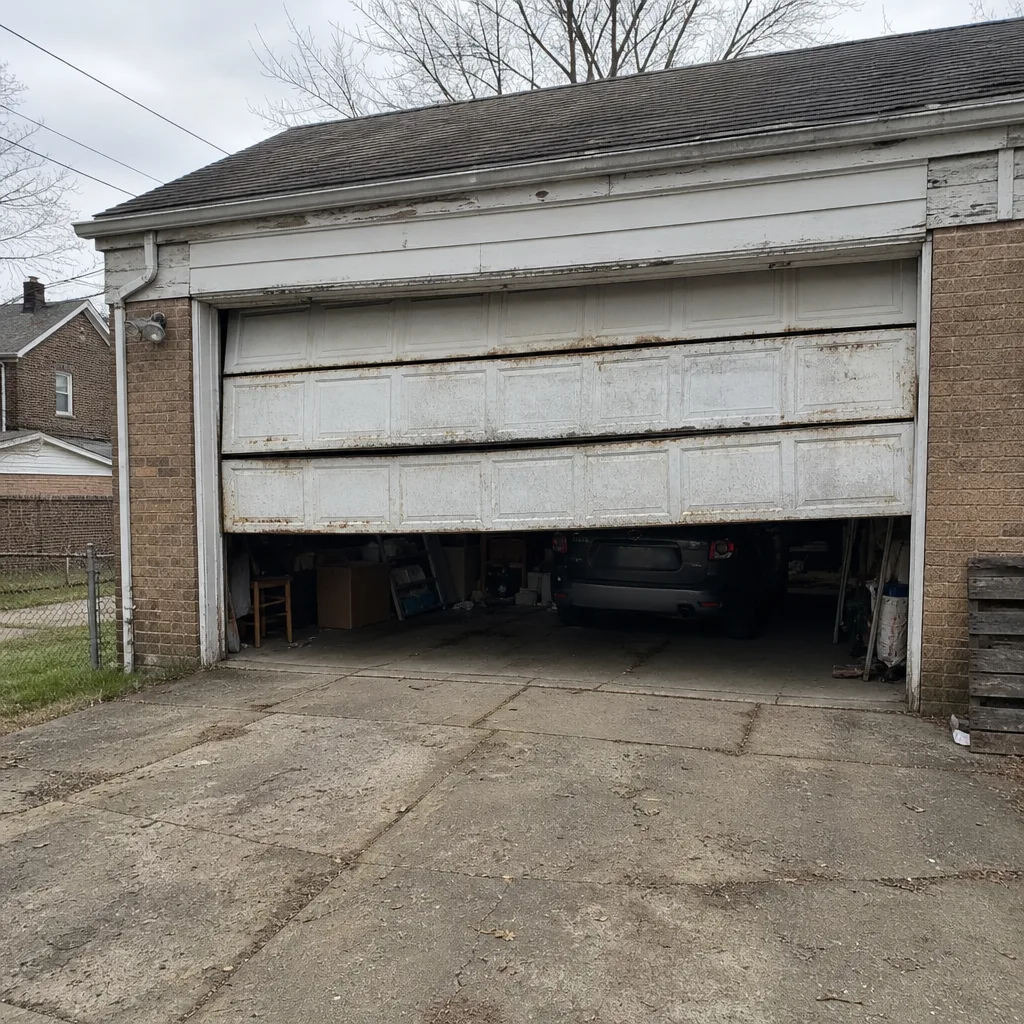 Before
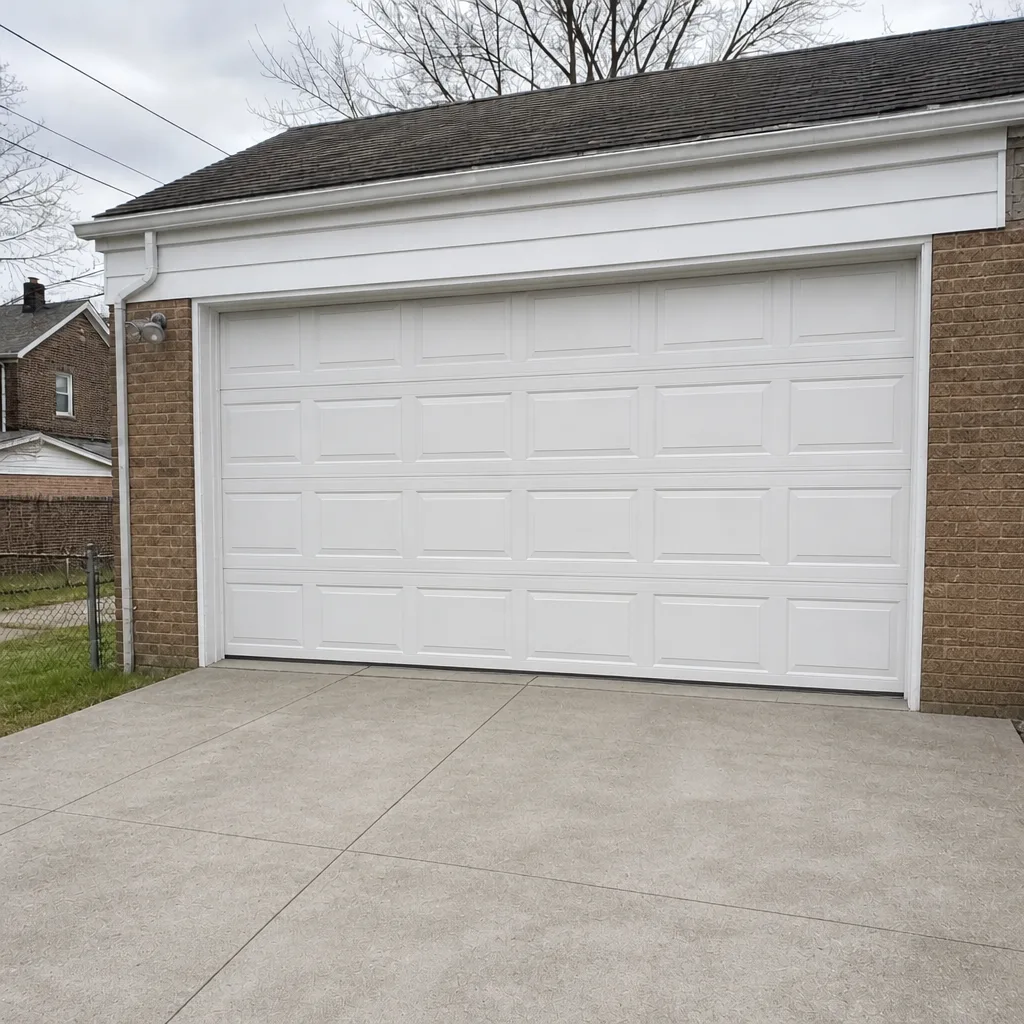 After
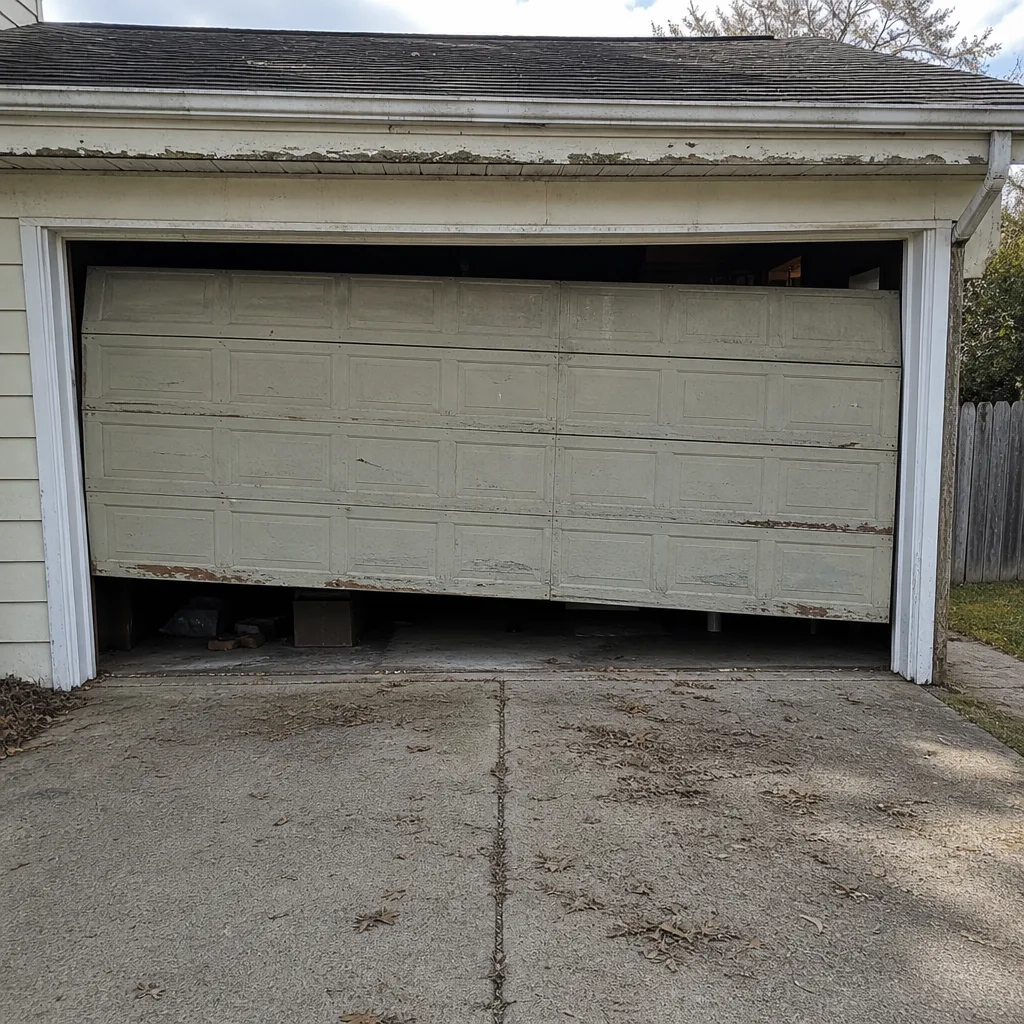 Before
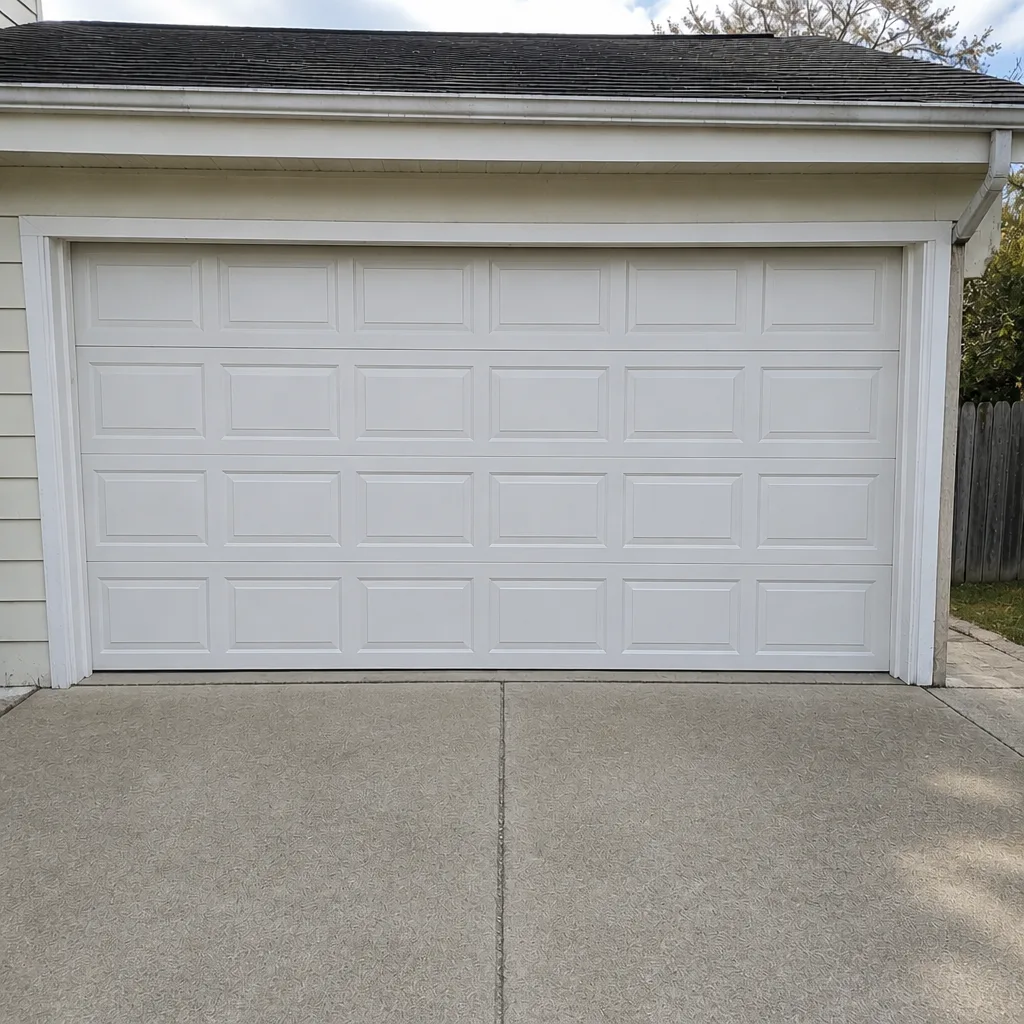 After
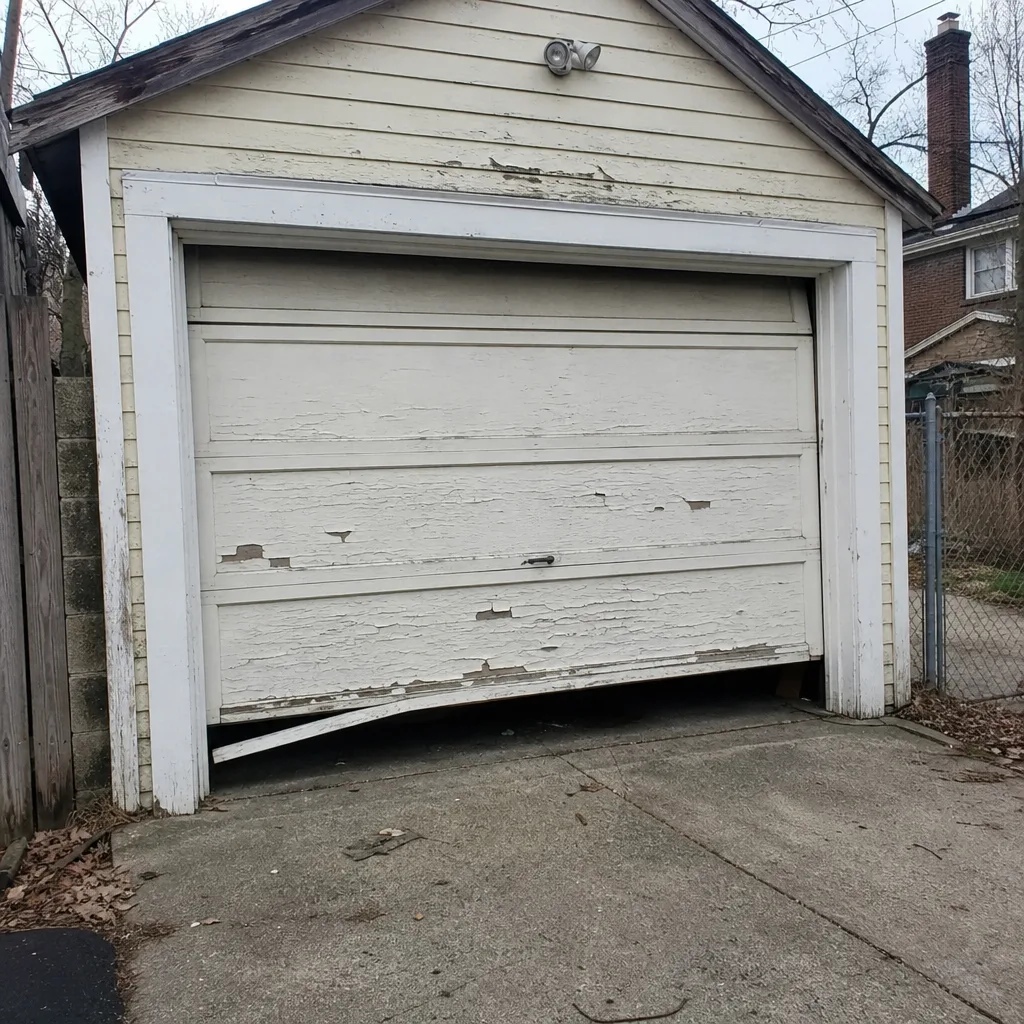 Before
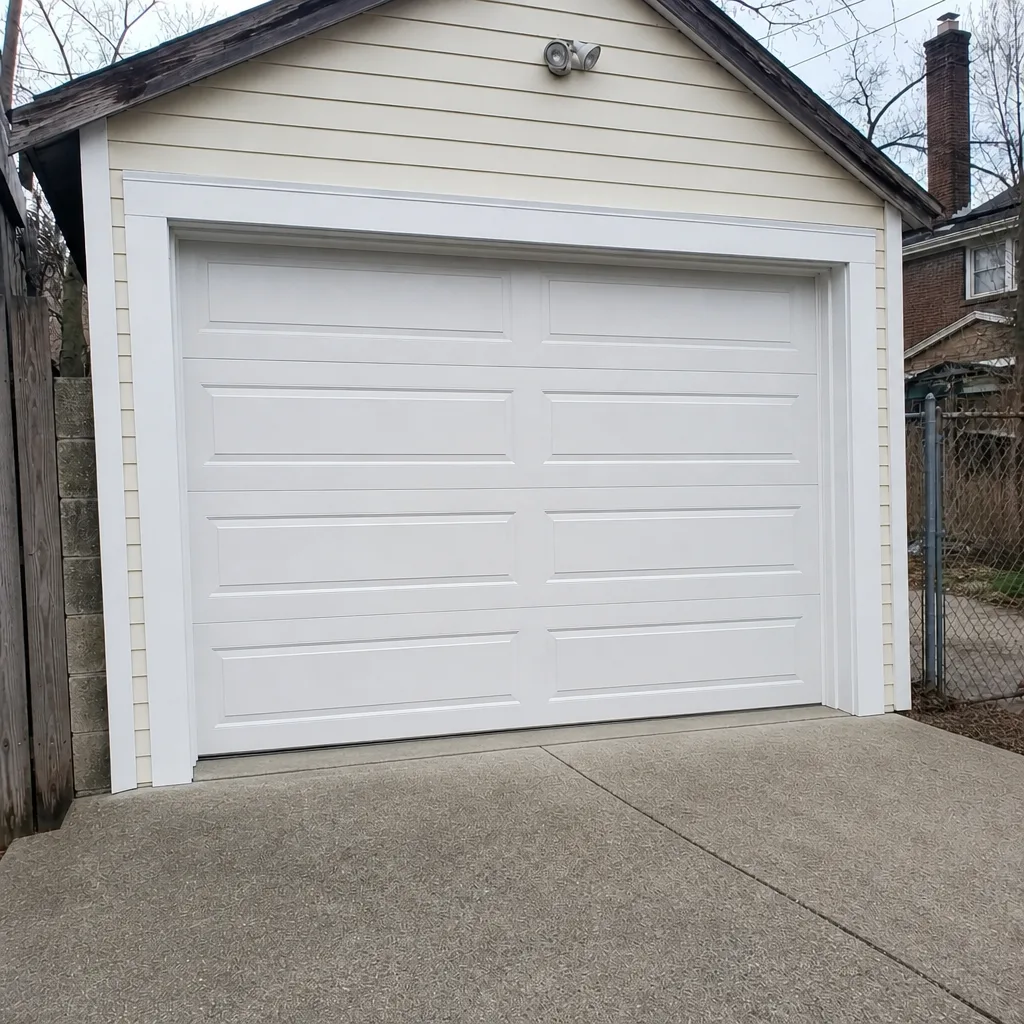 After
When to Call a Professional
Call a professional in Price Hill when the door’s warning signs involve anything that stores force: a spring gap or a popped spring, a frayed or kinked cable, or a door that’s come off the track. Call when the opener strains or the door is too heavy to lift by hand. Call when the door reverses on contact, hangs at an angle, or moves unevenly. And call when the sound of the door has changed in a way you can’t explain. Spring and cable work is dangerous, and a trained professional is the only person who should touch either. Garage Door Repair Price Hill offers free estimates in Price Hill – call (855) 773-8249. We answer 24/7, with fast dispatch from 7am to 7pm, Sunday through Friday.
Frequently Asked Questions
A visible gap in the torsion spring coil, popping or snapping sounds during travel, and a door that has become noticeably harder to open by hand are the clearest warning signs. A spring that’s starting to fail will also show a change in how the door balances. If you see a gap or hear popping, stop using the door and call us. Call (855) 773-8249 for an exact quote – estimates are free.
Grinding usually means worn rollers, dry or worn hinges, or a track that’s out of alignment. It often gets louder in cold weather in Price Hill, which points to dry hardware. A grinding door is usually a “monitor it and schedule service” sign, but if the grinding is accompanied by a slowing or struggling opener, it can be a signal the door is out of balance and the spring is the real cause. Call for a free estimate and we’ll tell you which.
Yes, in most cases – lubricating the hinges, rollers, and track is fine and often quiets a squeaking door. Do not lubricate the torsion spring or the cables. Lubricant on a spring hides the surface cracks a technician needs to see, and it doesn’t restore a spring that’s lost tension. If you’re not sure which part is squeaking, call us and we’ll take a look.
It can, but never without your approval. We give you a typical range on the first call and a written estimate after we’ve looked at the door. Any additional work is quoted and agreed before it starts. The written estimate is the price we hold to, and you won’t get an invoice bigger than the estimate you approved. Call (855) 773-8249 for an exact quote – estimates are free.
Yes, same-day service is available for urgent Price Hill garage doors, including a snapped spring or a door stuck out of the track. We answer 24/7, with fast dispatch from 7am to 7pm, Sunday through Friday, and a call outside dispatch hours is booked into the next opening. If your door is stuck open and the house is exposed, call us and we’ll get someone out.
The local professional we connect you with is licensed and insured as their state requires. Spring and cable work is the most dangerous repair a garage door needs, and it’s the one that shouldn’t be done without someone qualified on site. Our technicians have up to 15 years of experience with the brands we work on. Call (855) 773-8249 to book a free estimate.
The Bottom Line
Your garage door has been telling you it needs service for months, in terms of speed, sound, and the way it looks. The warning signs that matter most are slow or uneven travel, grinding or popping, a visible spring gap, a frayed cable, and an opener that’s straining or blinking out codes. Sort what you see and hear into “monitor it” and “stop using the door,” and call a professional for anything involving springs, cables, or a door that’s off the track. Catching the problem early is the difference between a simple repair and a much bigger one. Your door is giving you the information. Use it.
Call Garage Door Repair Price Hill at (855) 773-8249 for a free estimate. We answer 24/7, with fast dispatch from 7am to 7pm, Sunday through Friday, for doors anywhere in Price Hill.
Written by the team at Garage Door Repair Price Hill.